
Heartbeat
The volcano had been sending up a plume of smoke behind us throughout the night. But the first time we noticed it was two hours into a nine hour climb.
At 2 am and 14,000 feet of elevation, we sat to drink water we weren’t thirsty for, eat snacks our stomachs told us not to, and allow our hearts a bit of a rest. One of the guides told us to turn off our headlamps and when our eyes adjusted, a hint of orange haloed the volcano across the way.
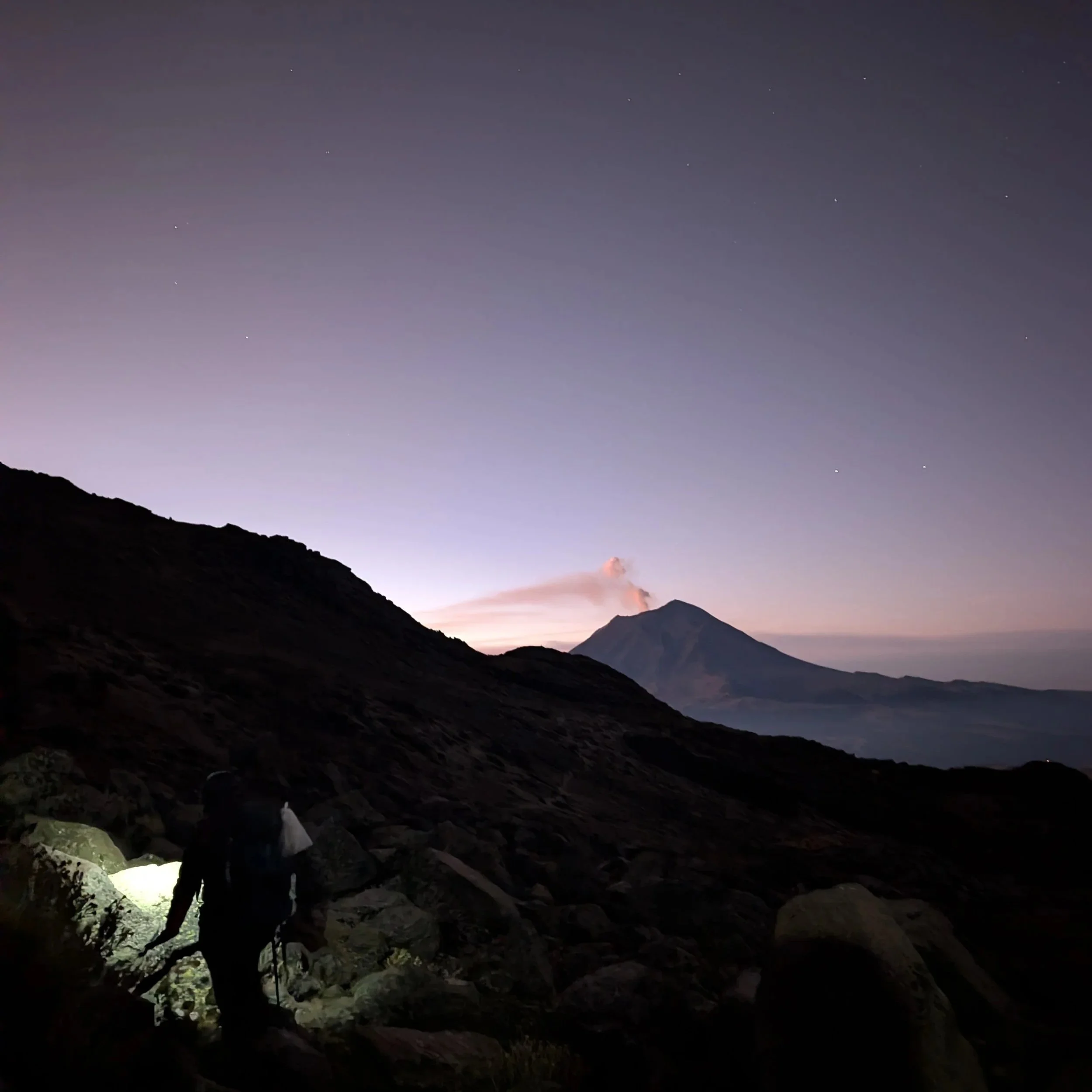
We oohed and aaahed, and then packed our things and started up the trail again. The circle of light from our headlamps kept up moving forward and the contrast between that bright light and the darkness made even mundane tufts of grass feel alien.
But we had a singular focus – ascending the dusty volcanic trail spiderwebbing around star-leaf plants. That pinpoint attention within the darkness pressing its hands to our shoulders made us feel plucked from time and space. Everything happening in the city pricked with lights below was wholly unimaginable.
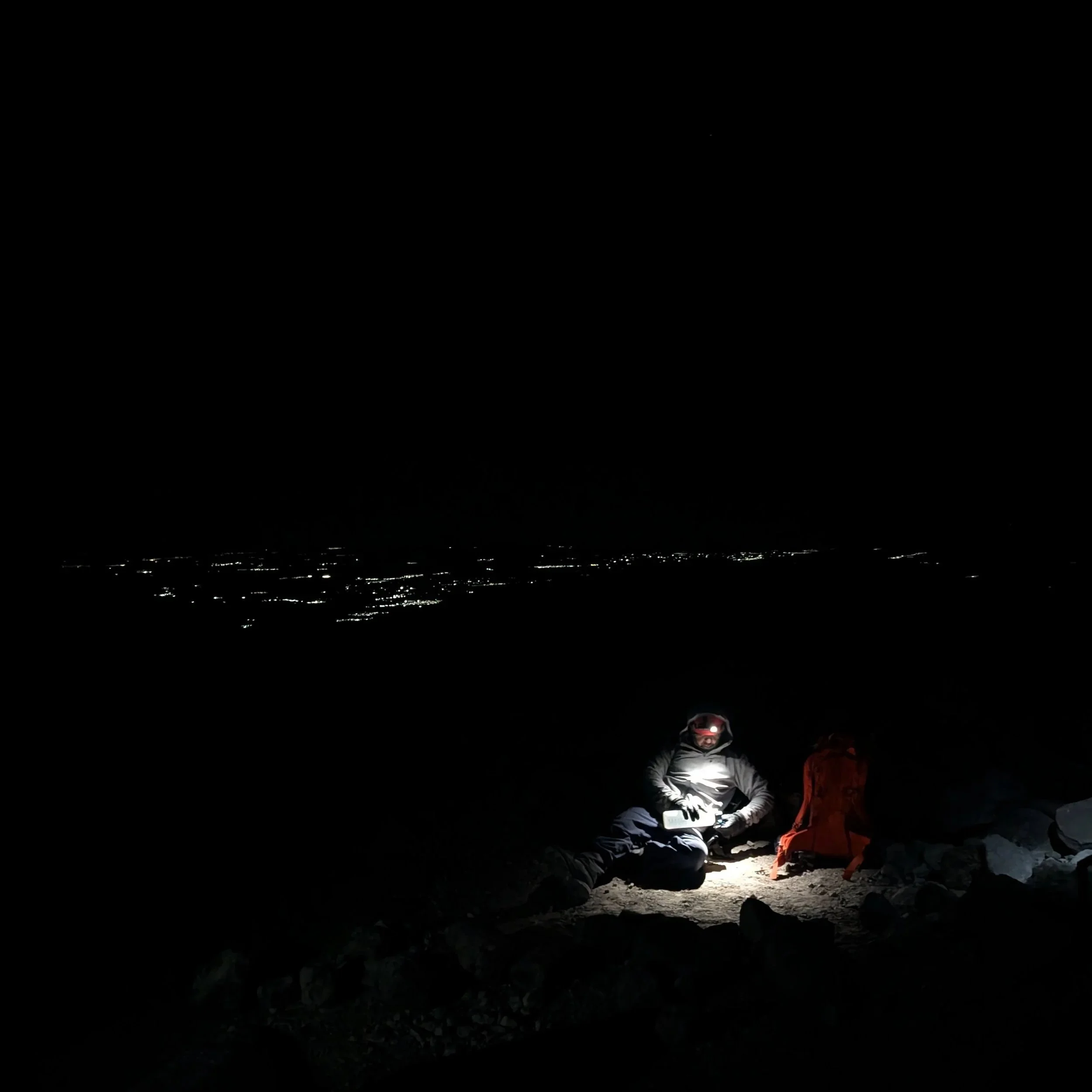
What didn’t need to be imagined were the clicks of our poles, the crunch of our footfalls, and the rhythm of our hearts in response to the incline. The music of the endeavor settled into hearts beating faster than steps which were slower than breaths. We contributed that song to the quiet that only present in the deep of night.
The earth had its breath as well, exhaling smoke from the crater of that volcano. Surely it has a heartbeat; what would that sound like? I was trying to keep mine low enough not to sweat and slow enough to maintain my efforts through the next nine-ish hours on the trail.
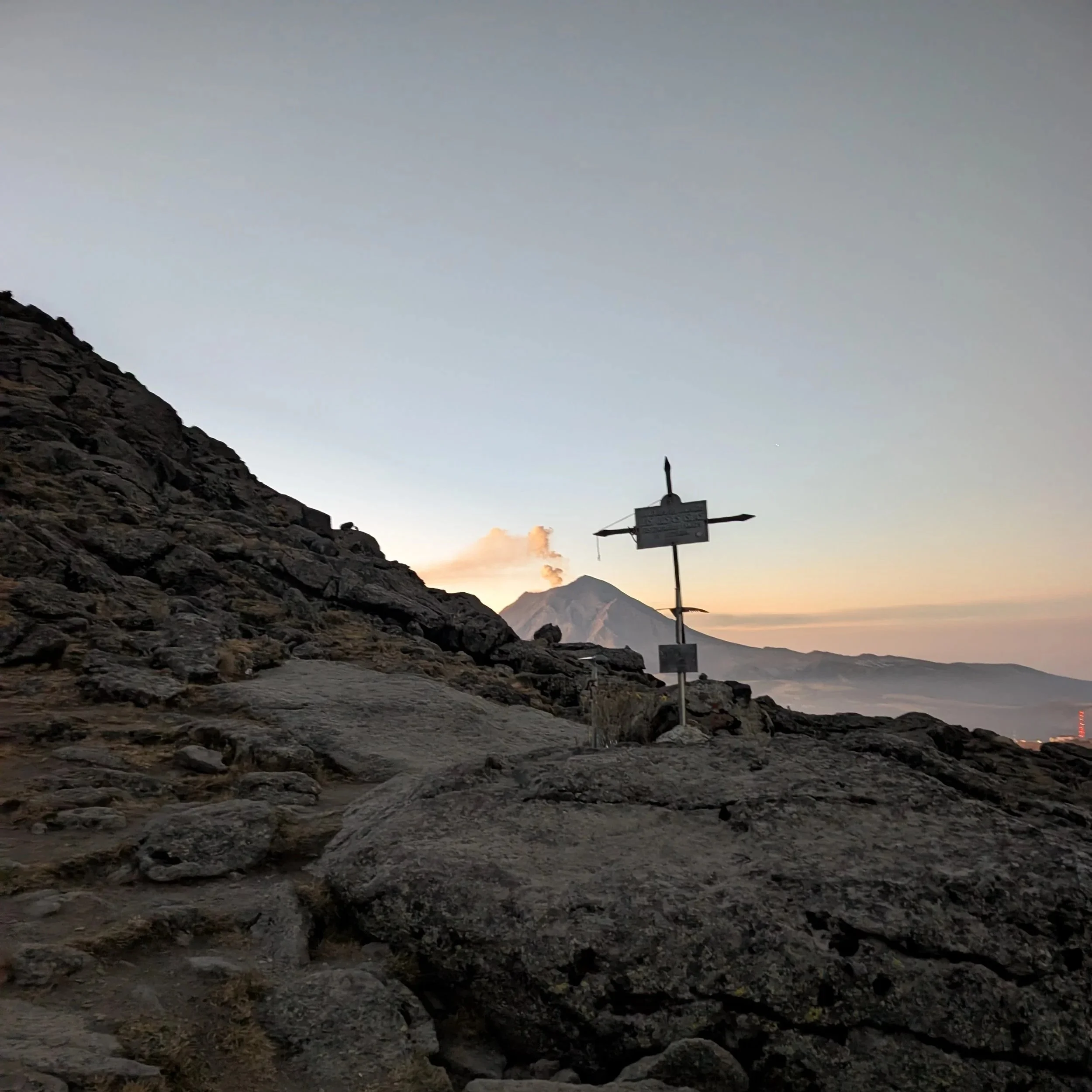
It’s hard to describe the kind of envelopment that happens in that kind of darkness. Closer than a blanket, almost a second skin. But as we were enveloped, so we also moved forward – courtesy of our hearts and our breaths and the earth’s features that pulled our curiosity there.
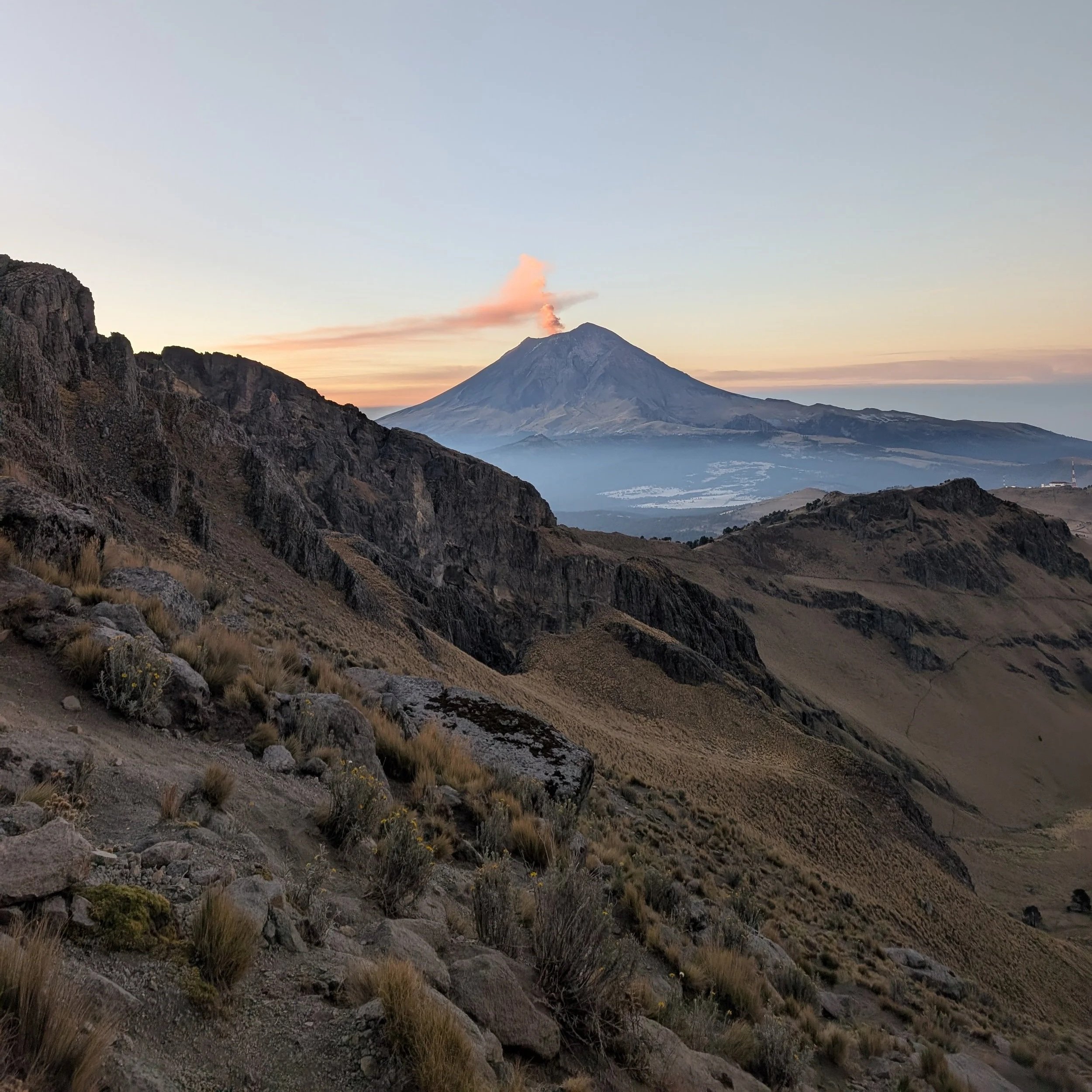
Inspired by events on Iztaccihuatl, Izta-Popo Zoquiapan National, Park Mexico